Tuesday, August 14, 2007
The Final Goodbye
I remember our first car ride together. At my request, she took me to my father’s grave. With the anxiety of our first meeting behind us, it was an emotionally calmer meeting. But throughout the hour-long drive, I couldn’t stop myself from staring at her. “That is your mother sitting there,” I was telling myself, “That is where you came from. She gave birth to you.” I simply couldn’t wrap my mind around the idea we’d once shared such a primal connection. I didn’t have that sense of biological recognition I’d expected before reunion. The disconnect I’d always felt between my baby and adult self seemed to fill up the car.

But her hands on the steering wheel offered proof of what I couldn’t seem to grasp. They were, unquestionably, my hands. She caught me looking and held up a hand. I held up mine and we marveled at their sameness.

At the cemetery, she walked me to my father’s grave. I placed a purple rose on his headstone, tears of disappointment streaming down my face. It would be one of the few times I saw her cry. She quickly retreated to the car. I could feel her wanting to run from this place but, instead, we shared probably the most honest exchange of our reunion. She told me she felt angry with him for dying before this reunion. She told me she’d dreamt of him the night before, and he’d raged at her for not telling him I’d come back some day. And then she’d told me how much they’d loved each other; how hard it was to live without him.

Standing in the cemetery, it all seemed like such a waste. My parents loved each other, had even married following my relinquishment. Twenty three years later, we were back together – my mother and me, standing at my father’s grave. She told me she wished they’d made a different decision; she wished she’d known he wouldn’t relent until she accepted his proposal. “We should have never given you up,” she said.

Our reunion continued for over a decade. She eventually found the courage to tell my siblings about me, but the strain of being kept a secret from my father’s family took its toll on me. We were wired differently, my mother and me. She tried not to feel, I can’t stop myself from feeling. I suppose I got tired of “understanding” why I should be kept a secret without receiving any empathy for what it is like to be the family secret. And we suffered from what most reunions suffer from; there is just no way to bridge the gap of all those lost years, no matter how much we cared for one another. Maintaining relationships under the strain of all the issues of reunion is emotionally exhausting.

So our reunion fizzled, and years slipped by. I’ll never know what those years were like for her, if she missed me or if it was simply easier on her. Strangely, I don’t doubt that she loved me in her own way.

On August 6th, my mother succumbed to cancer. She’ll be laid to rest next to my father and, someday, I will visit both of them there, at the cemetery where my mother and I had our first real conversation. No matter how illogical it is, no matter how well I know the realities of relinquishment, adoption and reunion, at times I cannot breathe with the thought both my parents are gone, taking with them the hope of a little girl who once thought she’d find the contentment of a real family.

Labels: , , ,

 
Rhonda Ruminated at 12:04 PM | Permalink | 26 People Ruminated
Thursday, May 10, 2007
In the Beginning . . .
The interior of the white, craftsman farmhouse was as bland and empty as the lives of the people who lived inside it.

He’d fallen into his life, without giving it any thought at all. He ran the wheat farm owned by his parents. The house belonged to them, as did the crops, the equipment and even the livestock. What little money he made outside of the family dole was through bartering and trading his belongings. New things – campers, cars and trucks – would appear in the driveway then disappear just as fast, each time adding a little cash to his pockets and, perhaps, temporarily making him feel worthwhile.

When he couldn’t produce the capital for his buy and sell ventures, the reality of his life crept back in. It was during those times that he ran. The small town bars knew him well, as did the police who regularly hauled him off to the drunk tank to sleep it off.

Sometimes, he disappeared only for an evening. Other times, he was gone for days. Eventually, always, the phone would ring and we’d head off to the jailhouse to pick him up, or he’d catch a ride home with the Sheriff who boarded his horses in our barn. What followed his homecoming was never a relief. He was a dry drunk and his periods of sobriety were dark, fearful times.

* * * * * * * * * *

She came to Eastern Washington to earn a degree, fully intending to return to the city and set out on her own. It was the late sixties and she paid attention to The Women’s Liberation Movement, picturing herself entering the business world, living independently and not needing a man to feel fulfilled. Though that dream seemed dead now, she still dressed the part, even while cleaning house, mending her husband’s work clothes or watching soap operas. She fit into the Polouse County landscape like a cactus on a ski slope. How she came to be a farmer’s wife probably had more to do with expediting the escape from her own mentally ill mother than any sort of life’s desire.

She resented her mother-in-law’s nearly constant overbearing presence and had trouble relating to any of her relatives and friends. They seemed content with their lives, while her own was an exercise in concessions and sacrifices. The difference between her and them, she determined, was children. As a bonus, she considered, adding a child to the family might force her husband to step up to the plate – and spare her the embarrassment of ever having to confess his sins to anyone; least of all to herself.

By happenstance, these people became my parents . . .


[This sits here as a cliff-hanger because it is the beginning of a book. I’ve decided to take the plunge and put my story out there, in its entirety, damn the consequences. I mention this only to explain why bits and pieces of what I’m putting together, like those above, will likely appear here once in a while. ]

Labels: , ,

 
Rhonda Ruminated at 8:26 PM | Permalink | 16 People Ruminated
Sunday, April 29, 2007
Somebody’s Daughter
I’ve reached middle age. My children only speak to me when they need money or a ride; my last eye appointment resulted in tri-focals and all my intentions to “gray gracefully” recently washed down the drain in a sudsy swirl of “biscotti blonde” hair dye.

Those, however, are the minor inconveniences of mid-life; the glimpses in the mirror reminding us things change and those changes are, more often than not, outside of our control. Mid-life also asks big questions whose answers cannot be found at the optometrist or plucked from drugstore shelves; questions we all must, at some time, face. Our parents’ age, they get ill, they die. It is then we realize biology and the passage of time are unbeatable foes.

Parents. Death. Biology. Those are loaded words for an orphan; words with a meaning few will understand; words filled with should-have-beens, losses and loneliness.

Somewhere, 3,000 miles away, my mother is dying. The surgeons closed her up, saying “there’s nothing we can do.” I found out days later, third hand. My adoptive mother holds my mother’s contact information hostage, using her eminent death and my emotions as a means to end our estrangement. I won’t sell my soul for a phone number.

So somewhere, 3,000 miles away, my mother is dying. I don’t know how to reach her and am not even sure I want to. There is something fundamentally wrong with this picture. My ambiguity makes me nauseous. In times like these, adult daughters are supposed to hold the family together. Were I not an orphan, these past weeks would have been filled with concern, torturous days in a hospital waiting room, heartfelt conversations traversing decades of memories and visits with unbending grief.

Instead, I will learn I’ve lost my mother when I stumble upon her online obituary. There will be no sibling on the other end of the phone line, sharing the aftermath; no gathering of family finding comfort in a shared experience. There will be no “bereavement flights” because, legally, I don’t meet the qualifications. I will not attend the funeral because my brothers will ask me to sit in the back, keep my identity cloaked and do nothing to further upset those who have come to grieve.

My grief will not be public or acknowledged. I must find a way to say goodbye in a world that thinks I can’t lose what I have never truly had.

I spent the first two decades of my life praying she remembered me; the next decade pressing against a reunion relationship loaded with conflicts and concessions; and the last decade resolved in the knowledge all our missing years carved an impassable chasm between us.

The greatest irony of all in this experience is that, for the first time in forty years, I hope my mother isn’t thinking of me. As she faces her last days on this earth, I don’t want her heart full of anguish and regret. I hope she can spend her last hours revisiting the life she lived rather than mourning the one that disappeared in a decision made in the early morning hours of September 22nd, 1967. I hope her spirituality is strong enough to relieve her fears. Mostly, I hope she doesn’t, for a moment, feel alone, but is sharing her death with the people who shared her life. That I wasn’t one of those people is now my burden, not hers.

And if she does think of me, I hope she knows that I am okay. I have learned how to be an orphan and ceased looking for ways to fix what is unfixable. I hope she knows that in the process of doing so, I’ve discovered her, the person. I hope she knows that, in my eyes, she is no longer a villain or hero. I see her as she is; a flawed human being. It sounds like something so simple, yet is one of my proudest accomplishments. I am okay; okay with what happened and okay with her.

Perhaps most importantly, I hope she knows that for all the things we couldn’t, or didn’t, share, we do share the wish that things had been different. I will always, always wish I’d been somebody’s daughter. When she takes her last breath, I hope she knows that I wish that somebody had been her.

Labels: , , , ,

 
Rhonda Ruminated at 11:04 AM | Permalink | 20 People Ruminated
Tuesday, September 12, 2006
My Own Drumbeat
I remember the kitchen in the farmhouse as enormous; tall and wide, the table long enough to host a small army and the counters built for giants. In my mind, I see the room from the child-high perspective from the dining room doorway: table to the left, kitchen to the right.

I couldn’t tell you where refrigerator stood, the stove was placed or if the floor was tiled or linoleum. I just remember one drawer – the top drawer on the far right, so far off the ground I had to stand on my tippy-toes to peer inside. That drawer held the strangest of treasure, an indulgence bringing excitement and guilt, an item provoking a curiosity I neither understood nor could pull myself away from . . .

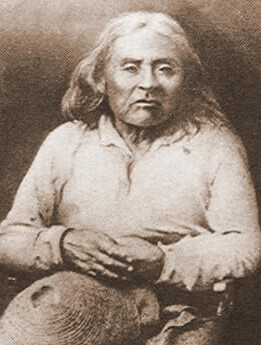
The Palouse County phone book. It wasn’t the book’s contents I found fascinating but the cover. A photo of Chief Sealth. S-e-a-l-t-h, Sealth. I remember sounding out his name and staring into his face as if he and I shared some kind of sacred bond. I was four years old, stealing away into the kitchen whenever I could to share a moment with the Chief, but never in the presence of my mother. I held no explanation for my fascination with his wrinkled face and knowing eyes, but was sure my interest, in some way, betrayed my adoptive family.

My third grade teacher, Mrs. Ellsworth, was a large woman with smooth olive skin and jet-black hair. She was a Blackfoot Indian. I remember her once taking off her sandals and showing us the bottom of her feet – to prove to a classmate her tribe’s name didn’t derive from their color. “Look,” she said, “normal feet, just like yours.” The day Mrs. Ellsworth brought her son to school was the first time I remember thinking it was possible I could be Native American. He was a toe-headed, light-skinned, blue-eyed kid like me.

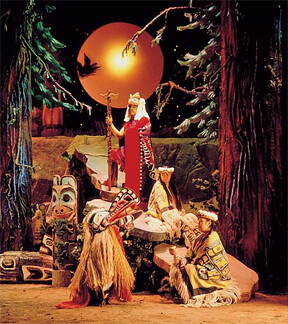
At the age of nine, my adoptive mother took my brother and me on a day trip to Tillicum Village, on Blake Island in the San Juans, where Northwest Coastal American Indians perform traditional dances in a cedar longhouse while tourist dine on salmon baked above open fire pits. I was lost in the ambiance, mesmerized by the Nuu-chah-nulth ancestral masks worn by the performers. I didn’t want to go home. It wasn’t until researching this piece I learned that Blake Island was the birthplace of Chief Sealth.

My adoptive family boasts about the immigration of their ancestors to their Pacific Northwest homestead, still in the family more than one hundred years later. They once owned miles of the best land in town, acreage fronting the Snoqualmie River to the South and stretching West to the confluence of the Snoqualmie and Tolt rivers. They carry that history like a badge of honor. But the story never told is that of the land’s original owners: the Snoqualmie Tribe who lived on the banks of the rivers for thousands of years before the arrival of Europeans.

Watered-down history books say the tribe willingly volunteered the land fifty years prior to my adoptive family’s arrival. But it has never escaped me who the rightful owners of that beautiful land are. And, as a child, I never tired of hearing my great-great aunt Gurina, who was born there, tell stories of the Indian women knocking on her front door to trade goods for dairy products and vegetables in the early 1900s.

My attraction to American Indian culture remains unexplained, but unwavering. Certainly, my early years in a rural farming community didn’t lend itself to multi-culturalism, nor did my parents’ insistence I was 100% Norwegian spawn some fantasy about being separated from my tribe. My fair skin and blonde curls implored me to blend in perfectly with my adoptive relatives. Still, at some point I began looking forward to the day I might reunite with my birthfamily and find, somewhere on the family tree, a branch validating a fascination seemingly spawned from nowhere.

But post reunion, when I was given a four-generation maternal family tree and instructed to ignore the obviously Polish name at the top (and also learned I wasn’t a stitch Norwegian), I realized family trees are subjective things. My maternal family is insistent upon being 100% Ukrainian, even if it defies evidence to the contrary.

My paternal family tree remains somewhat mysterious. Third-hand information says I am Swedish and Welsh on that side. My paternal half-brother embraces the Swedish and rejects the Welsh. I seem to be the only one who notices our father’s dark skin and darker hair. If my birthfather carried a secret about a Native American ancestor, he took it with him to his grave.

Family trees are dependent upon what a family is willing to reveal, but new DNA technology offers a truth serum. When genetic testing for ancestral origins became available I considered ordering myself a lab kit, then was crushed to discover that, being female, I carry only the genetic markers to trace my maternal line. Uncovering my father’s ancestry requires the DNA of my brother.

My brother: also abandoned by my father. My brother: with a “proud to be Swedish” bumper sticker adorning his truck. My brother: who happily sits amongst our family, keeping me a secret, complacent in the act of sparing them the knowledge our father fathered a bastard-child. My brother: with whom I share so much but will forever be divided from by his legitimacy. My brother: who hasn’t phoned in six years.

More than stubbornness stops me from picking up the phone. I will not beg him for a thread of my own genetic fabric. The cost of doing so will be a directive to value other things and show gratitude for the smidgens of information he smuggles away from the family gatherings to share with me. My brother is the gatekeeper of my family tree and I simply refuse to sell my soul to get my hands on the key.

I would feel like the women of the Snoqualmie Tribe, forced to beg for bits of the crops grown on land rightfully belonging to them.

That doesn’t mean I must ignore the pull I feel towards American Indian culture. Leaving it isn’t a choice; it steers me.

Last Spring, I attended a talent show at my son’s school. For most of the audience, it was an evening of giggles and applause but, for me, the entertainment stopped when a family walked upon stage – four generations of American Indians wearing traditional dress. The great grandfather took his place at the drum, the lights went down and the fathers, mothers, aunts, uncles and children danced around the drumbeat, singing in an unfamiliar language. One didn’t have to understand the words to recognize the passion of their song; to know they were calling out to ancestors and celebrating their roots, their connectedness.

It took my breath away. It wasn’t until the drumbeat stopped and the applause began I realized my body was frozen in rapture and my cheeks were wet with tears.

A DNA swab will not prove or disprove whether or not those tears are real. They speak for themselves.

Labels: , ,

 
Rhonda Ruminated at 1:29 PM | Permalink | 18 People Ruminated
Saturday, August 05, 2006
Echoes
Thanks to my faithful readers for your concern about my unexplained absence, and I am sorry if I caused anyone worry.

I have been trying to explain it – for days – but the words don’t come. “Writer’s block” doesn’t provide an explanation, as I have plenty of things to write about. I even have articles on standby I could have used to fill in the gap. But they didn’t fit my mood and, thus, looked artificial, plastic and pretend.

I began this blog to work through my own issues – some adoption related, some the product of a traumatic childhood. I throw in the funny, the anecdotal, the rants and raves and feel-good stories too, because I don’t live in my past traumas, despite how often they are able to encroach into my present day life.

There are times, despite all the work I’ve done to address those childhood experiences I still carry with me, despite all the painful “soul work,” the writing, the therapy, the reading, the changes I’ve made in my life allowing me to be who and what I am, the echoes from the past still manage to become so loud their reverberations drown out the sounds of my immediate world.

Usually, when I hear those echoes, I listen, apply logic, visit the past and grieve that which needs to be grieved, and they soon retreat to just a low whisper, losing their ability to deceive me into thinking they are the sound of my present day reality.

But, there is one echo capable of reaching a disorienting, fevered pitch, full of trickery and illusion. It doesn’t come uninvited, but is triggered, usually, by some, accurately or not, perceived violation of trust from someone in my immediate world. It is that echo drawing me away lately from the things I value. It is that echo inviting me into old patterns, those that tell me not to share, not to trust, to build tall walls of self-protection.

One of my former students was an adoptee who reminded me very much of myself at her age. We spoke a lot about her adoption experience. I ached for her as I watched her struggle with growing up adopted. She was skilled at giving the party lines she’d been coached to believe, but the pain in her eyes, the look on her face, always exposed her true feelings. She had echoes too – and I was fortunate enough to be the person she turned to when they became too loud. But, she moved to another school and I moved across country. We kept in touch for a short time, then fell out of the habit. I’ve missed her and think of her often. It’s been six years.

Last week, she found me, making contact through email. She’s now nearly eighteen years old, a grown woman. And, she is struggling. Her life is not going well.

She asked me about trust; wanting to know if my adoption experience had damaged mine, sensing a damaged sense of trust sits at the core of her own struggles. How ironic she found me, asked this question, while I was trying to fend off the sounds of my own echoes.

She is now the age I was when I built my walls.

I was seventeen when my adoptive mother sent me to foster care. I cried for days, wailing, with all the vulnerability of an abandoned child. And, with no empathic ear anywhere nearby, no one to help me see it wasn’t my fault, I finally had to shut it off, flip the switch on the unbearable amount of emotional pain I was experiencing.

I did it by promising myself I would never, ever trust anyone again; I would never, ever love anyone again and I would never, ever allow myself to be loved again. For the most part, I kept that promise. For thirty years. I surrounded myself by relationships that were mostly superficial, designed to guard my vulnerabilities.

With the exception of one person . . . a former junior high school teacher, who took me in, told me it wasn’t my fault, and nurtured me until I got back on my feet. I’d reached out to her, as my adoptee friend is now reaching out to me.

She has learned all the tricks I used to know . . . all the ways to stay numb from the pain. And, here I am, immersed in my own echoes, being asked for help. I hope I am up to the task. I hope I don’t let her down.

Because I want her to learn what took me thirty years to learn – that when you don’t allow yourself to love, you cannot be loved; that when you deny your authentic, feeling self, your life becomes an endless exercise in pretend; that being numb might protect you from pain, but it denies you the beauty of life, of feeling anything.

And I say this in the midst of my own echoes, the temptation of returning to numb pressing against me. I haven’t been here writing. I haven’t been here reading. I haven’t engaged in any of the things I usually do – the things that bring human interaction and feeling. At 38 years old, I am still as vulnerable to turning off my feelings as I was at seventeen. It only takes the right trigger.

So, my friends, that is where I’ve been . . . lost in my own echoes, feeling vulnerable and fighting the temptation to slip into un-blissful numbness for a while.

But, I can’t. I can’t because I want myself available for my adoptee friend, and anyone who reads these pages who might relate in some way.

Most importantly, I can’t because I need myself available to myself.

Labels: , ,

 
Rhonda Ruminated at 10:32 AM | Permalink | 17 People Ruminated